Chordata
Phylum Chordata includes animals that share four defining features at some stage of development:
- Notochord
- Dorsal hollow nerve cord
- Pharyngeal slits
- Post‑anal tail
Chordata is a phylum‑level group, the same rank as Arthropoda, Mollusca, and Fungi.
Its members range from simple, fish‑like lancelets to highly complex vertebrates.
The four chordate traits may appear only during embryonic development or persist throughout life, depending on the group.
Subphyla of Chordata
1. Cephalochordata

Lancelets (amphioxus).
These animals retain all four chordate characteristics throughout life.
Their body plan is simple: a persistent notochord, segmented musculature, and a fish‑like shape suited for shallow marine environments.
Cephalochordates provide a living model for early chordate structure.
2. Tunicata (Urochordata)
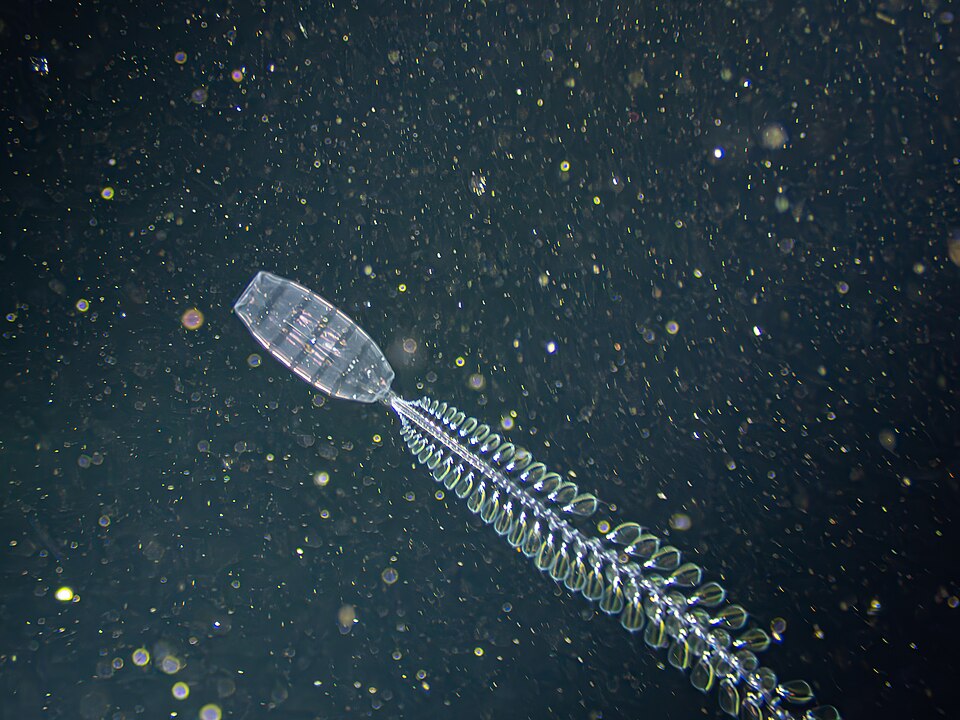
Tunicates and sea squirts.
Chordate traits appear in the free‑swimming larval stage, which has a notochord and dorsal nerve cord.
Adults become sessile filter feeders, losing most chordate features as they transform.
The body is enclosed in a tunic made of cellulose, a unique feature among animals.
3. Vertebrata
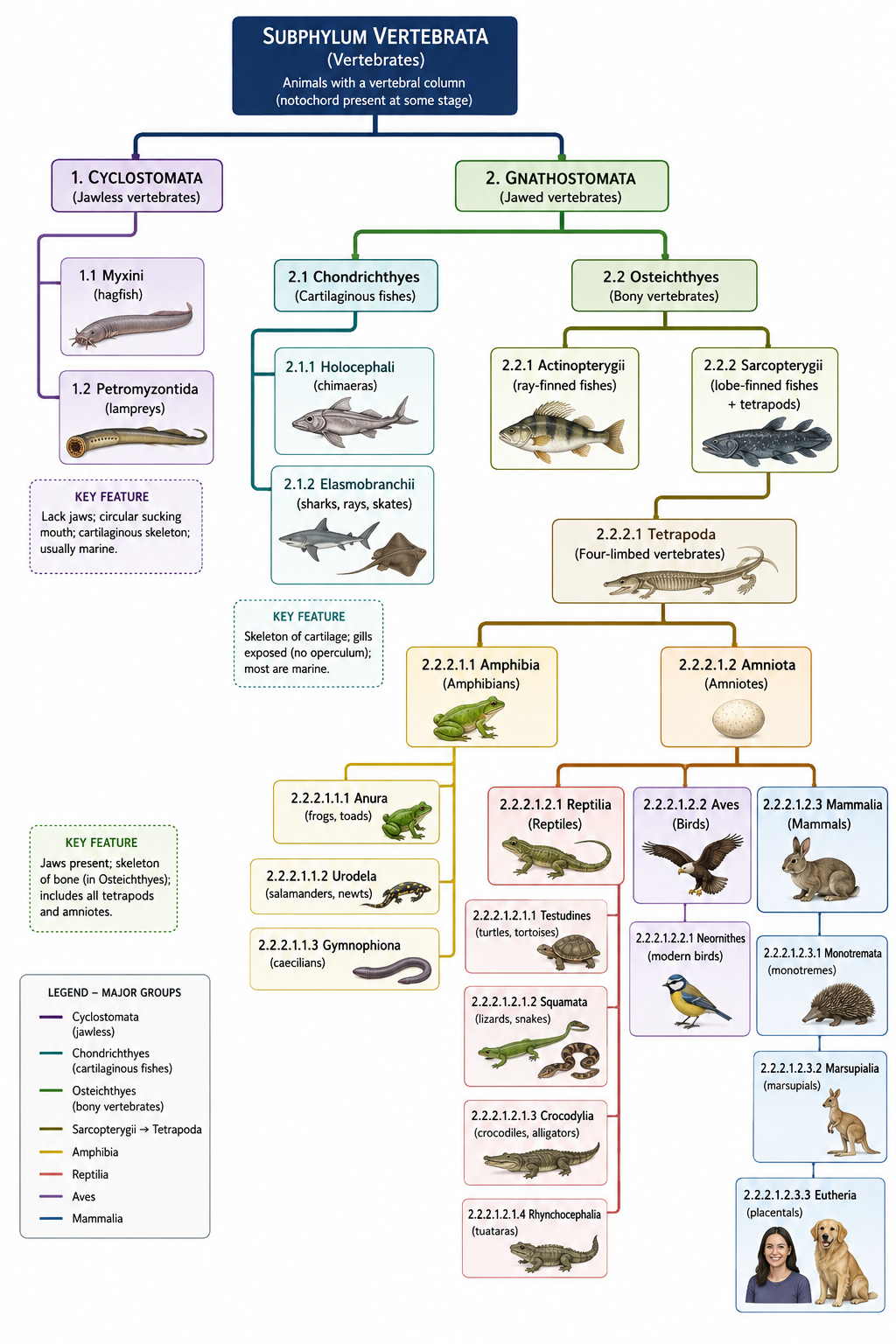
Vertebrates possess a vertebral column, a cranium, and a more complex organ system organization.
This subphylum includes fish, amphibians, reptiles, birds, and mammals.
The vertebral column replaces the notochord as the main axial support in most adult forms.
Vertebrates show extensive diversification in body plans, habitats, and physiological adaptations.