Phylum: Euglenozoa
This phylum contains a large and diverse group of flagellated protozoan species. Representative organisms include Trypanosoma (the causative agent of sleeping sickness) and Euglena. Members of Euglenozoa share characteristic features of the flagellar apparatus and cell surface, including a proteinaceous pellicle and a paraflagellar rod.
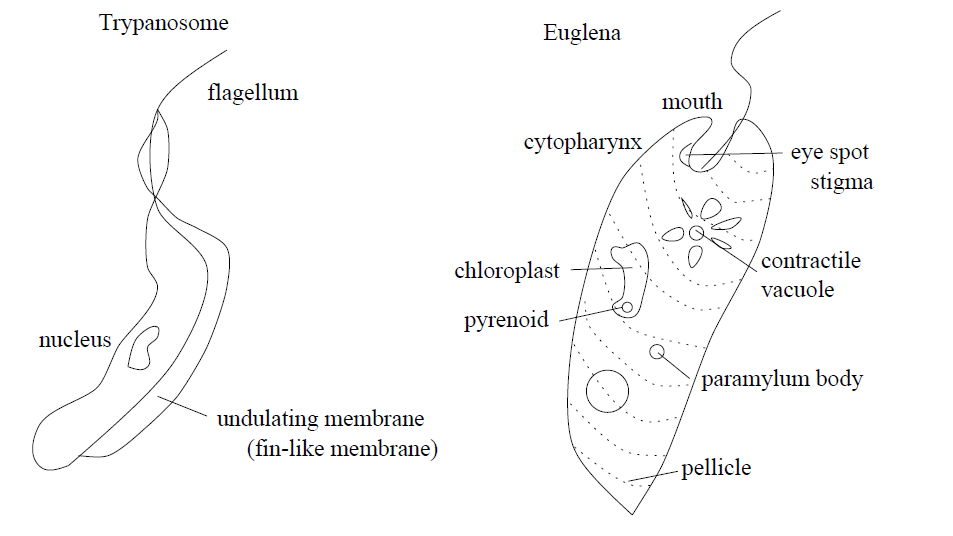
In Euglena, the eyespot (stigma) contains pigments such as astaxanthin, which absorb blue‑violet light (blue‑green in some species). Flagellar movement is coordinated by sensory structures associated with the eyespot. The pellicle provides structural support in place of a cell wall, allowing the organism to maintain shape while remaining flexible.
A contractile vacuole functions as a water‑regulating pump, expelling excess water from the cell. Paramylon bodies serve as storage sites for polysaccharides. Euglena may lose its chloroplasts when cultured at 35 °C for several generations or when treated with streptomycin.
Major Groups
Euglenida
Euglenids are primarily free‑living organisms found in freshwater environments. Many species contain chloroplasts and perform photosynthesis. The pellicle provides structural support while allowing flexibility. The eyespot contains carotenoid pigments that detect light. Paramylon granules serve as carbohydrate storage bodies.
Kinetoplastea
Kinetoplastids are a group of heterotrophic flagellates characterized by the presence of a kinetoplast, a dense DNA‑containing region within the mitochondrion. This group includes parasitic species such as Trypanosoma and Leishmania. The kinetoplast is involved in mitochondrial genome organization and replication.
Diplonemea
Diplonemids are free‑living marine organisms with complex mitochondrial genomes. They are important components of marine microbial communities and exhibit diverse nutritional modes.
General Characteristics
- One or more flagella with a paraflagellar rod
- Pellicle composed of protein strips that maintain cell shape
- Mitochondria with discoidal cristae
- Diverse nutritional strategies, including autotrophy, heterotrophy, and mixotrophy
- Presence of a kinetoplast in kinetoplastids
Ecological and Biological Importance
Photosynthetic euglenids contribute to primary production in freshwater systems. Kinetoplastids include medically significant parasites responsible for diseases such as African sleeping sickness and Chagas disease. Diplonemids play roles in nutrient cycling in marine environments.