Kingdom: Protista
Kingdom: Protista consists of protozoan protists and algal protists, representing a wide range of unicellular eukaryotes with varied modes of nutrition and locomotion.This page is based on traditional protist classification. Modern classification distributes these organisms across several eukaryotic supergroups, such as Excavata, SAR, Archaeplastida, and Amoebozoa, according to evolutionary ancestry rather than morphology.
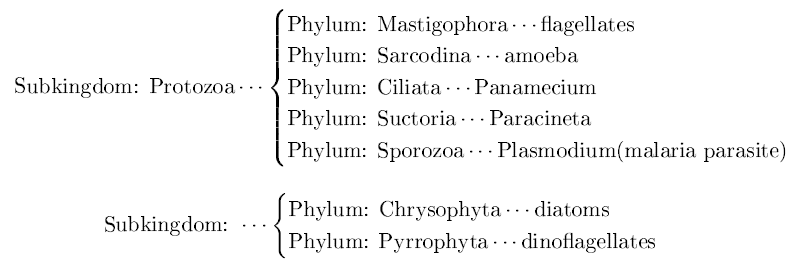
Phylum: Mastigophora
This phylum contains the largest number of protozoan species, characterized by locomotion using one or more flagella. Representative organisms include Trypanosoma (the causative agent of sleeping sickness) and Euglena.In Euglena, the eyespot (stigma) contains pigments such as astaxanthin, which absorb blue‑violet light (blue‑green in some species). Flagellar movement is coordinated by sensory structures associated with the eyespot. The pellicle provides structural support in place of a cell wall, allowing the organism to maintain shape while remaining flexible.
A contractile vacuole functions as a water‑regulating pump, expelling excess water from the cell. Paramylum bodies serve as storage sites for polysaccharides. Euglena may lose its chloroplasts when cultured at 35 °C for several generations or when treated with streptomycin.
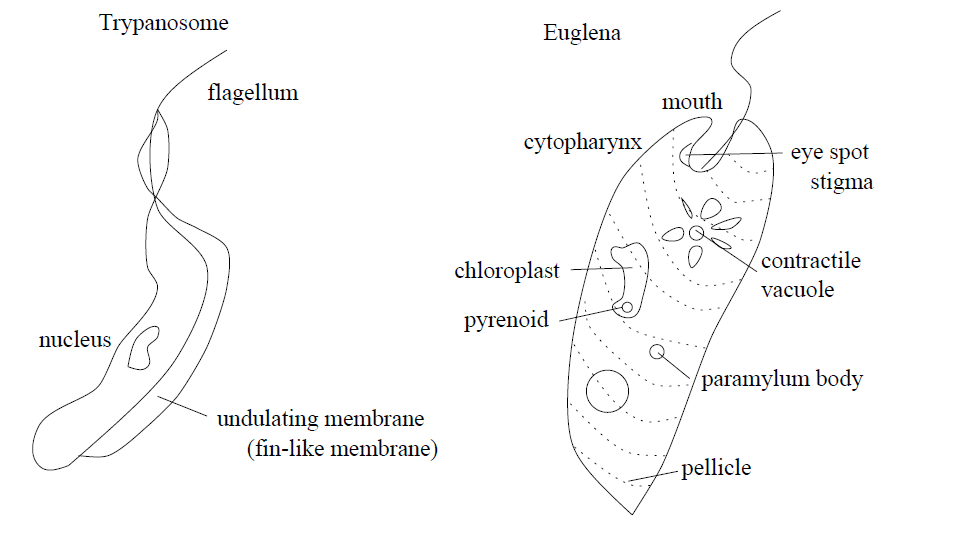
Trypanosome and Euglena(Phylum: Mastigophora)
Phylum: Sarcodina
Members of this phylum move using pseudopodia, temporary cytoplasmic extensions formed by the flow of endoplasm and ectoplasm. Locomotion and feeding occur through the coordinated action of contractile microfilaments, which direct cytoplasmic streaming into the pseudopods. This mechanism allows Sarcodina to engulf food particles through phagocytosis and to navigate their environment with flexible, amoeboid movement.Phylum: Ciliata
Members of this phylum are characterized by the presence of cilia, which function in locomotion and feeding. They possess both a micronucleus (germline nucleus) and a macronucleus (somatic nucleus). Conjugation occurs only between compatible mating types, and some species contain multiple micronuclei.Stentor exhibits a distinctive chain‑like arrangement of nuclei, while Paramecium displays clearly differentiated micro‑ and macronuclei. Ciliates are active predators, using coordinated ciliary movement to capture food particles.
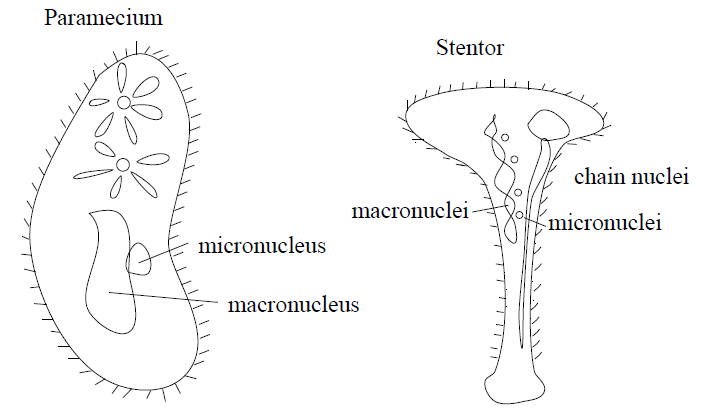
Paramecium and Stentor (Phylum: Ciliata)
Phylum: Suctoria
Adult suctorians lack cilia, although their juvenile stages are ciliated. Mature individuals possess tentacle‑like structures used for capturing prey. Neurofibrils originate from basal bodies within the trichocysts, supporting sensory and feeding functions. Suctorians are also predatory, often attaching to substrates while feeding on smaller ciliates.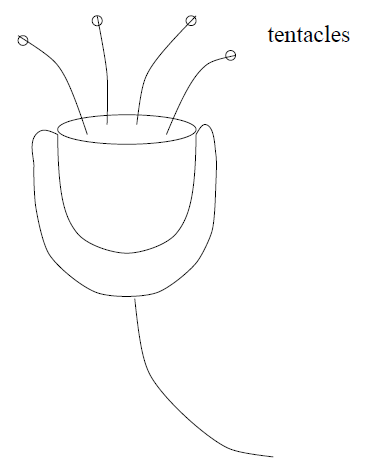
Paracineta (Phylum: Suctoria)
Phylum: Sporozoa
Members of this phylum are obligate parasites that require animal hosts to complete their life cycles. Plasmodium, the causative agent of malaria, infects red blood cells and releases merozoites, which trigger the characteristic fever cycles. Sexual reproduction (meiosis) occurs in the salivary glands of the mosquito, where sporozoites develop before being transmitted to a new host.Phylum: Chrysophyta (Diatoms)
Diatoms possess silica‑based cell walls (frustules) that form intricate, species‑specific patterns. When they die, their silicated shells accumulate on the ocean floor, contributing to diatomaceous deposits. These organisms play a major role in aquatic primary production.Phylum: Pyrrophyta (Dinoflagellates)
This phylum includes the yellow‑green algae (Class Xanthophyceae) and golden‑brown algae (Class Chrysophyceae), as well as the dinoflagellates. Species such as Gonyaulax and Gymnodinium are responsible for red tides, producing toxins like saxitoxin, which binds to calcium channels and can paralyze striated muscle. Many dinoflagellates possess a cellulose‑reinforced theca, but they lack typical histones and centromeres. Their mitosis is unusual: the spindle apparatus does not form in the conventional manner, and chromosomes remain attached to the nuclear envelope throughout division.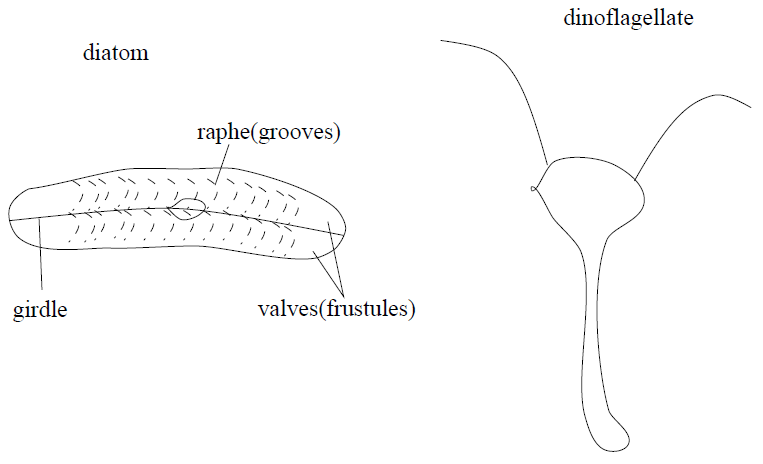
Chrysophyta diatom and Phyrrophyta dinoflagellate