Pre-Fish Chordates
Pre-fish chordates represent the earliest stages of chordate evolution before the emergence of vertebrates and true fish. These organisms display the fundamental chordate body plan, including a notochord, dorsal hollow nerve cord, pharyngeal slits, and a post-anal tail. Although they lack vertebrae and crania, they form the structural and genetic foundation from which vertebrates evolved.
Cephalochordata (Lancelets)
Cephalochordates, commonly known as lancelets, are small marine animals that retain all four chordate characteristics throughout life. They possess a notochord that extends the full length of the body and serves as the primary axial support. Lancelets have segmented musculature, a simple nerve cord, and a pharynx adapted for filter feeding. Their streamlined shape resembles primitive fish, yet they lack vertebrae, jaws, paired fins, and complex sensory organs. Cephalochordates represent a stable, conserved lineage that preserves the ancestral chordate morphology.
Tunicata (Tunicates)
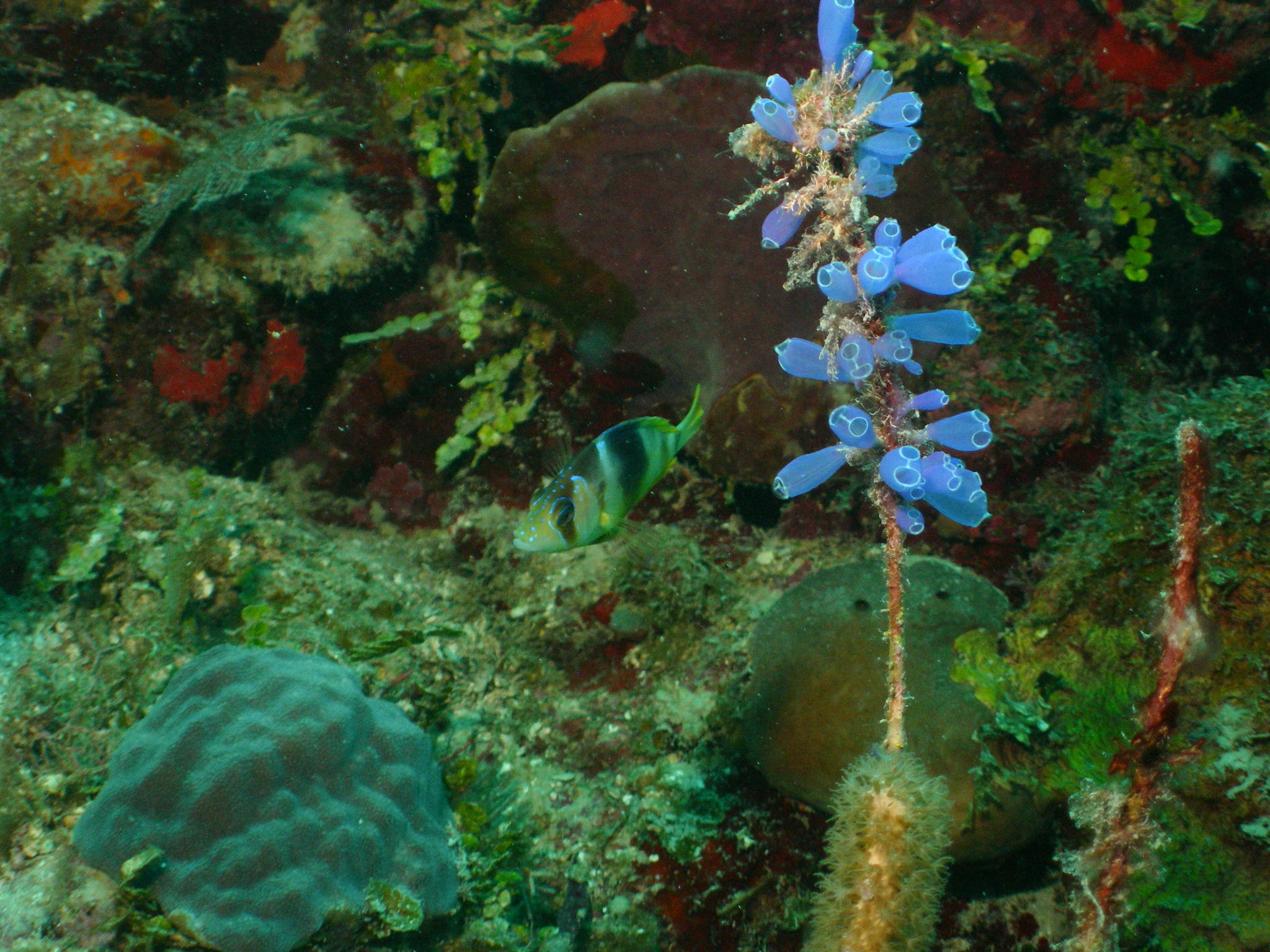
Tunicata, or tunicates, exhibit a distinct separation between larval and adult forms. Larvae possess the full chordate feature set, including a notochord and dorsal nerve cord, enabling free-swimming behavior. During metamorphosis, adults lose many chordate traits and develop a sac-like body specialized for filter feeding. Despite their simple adult morphology, tunicates are genetically closer to vertebrates than lancelets. Their life cycle demonstrates how chordate features can be transient and developmentally regulated.
Early Vertebrates
The transition from non-vertebrate chordates to vertebrates occurred with the appearance of early vertebrate forms. These organisms developed a cranium, more complex sensory structures, and the beginnings of vertebral elements. Early vertebrates include ostracoderms and other jawless armored forms that preceded modern fish. Although still lacking jaws and paired fins, these species mark the evolutionary step between pre-fish chordates and the first true fish lineages.
Adaptive Immune System Evolution
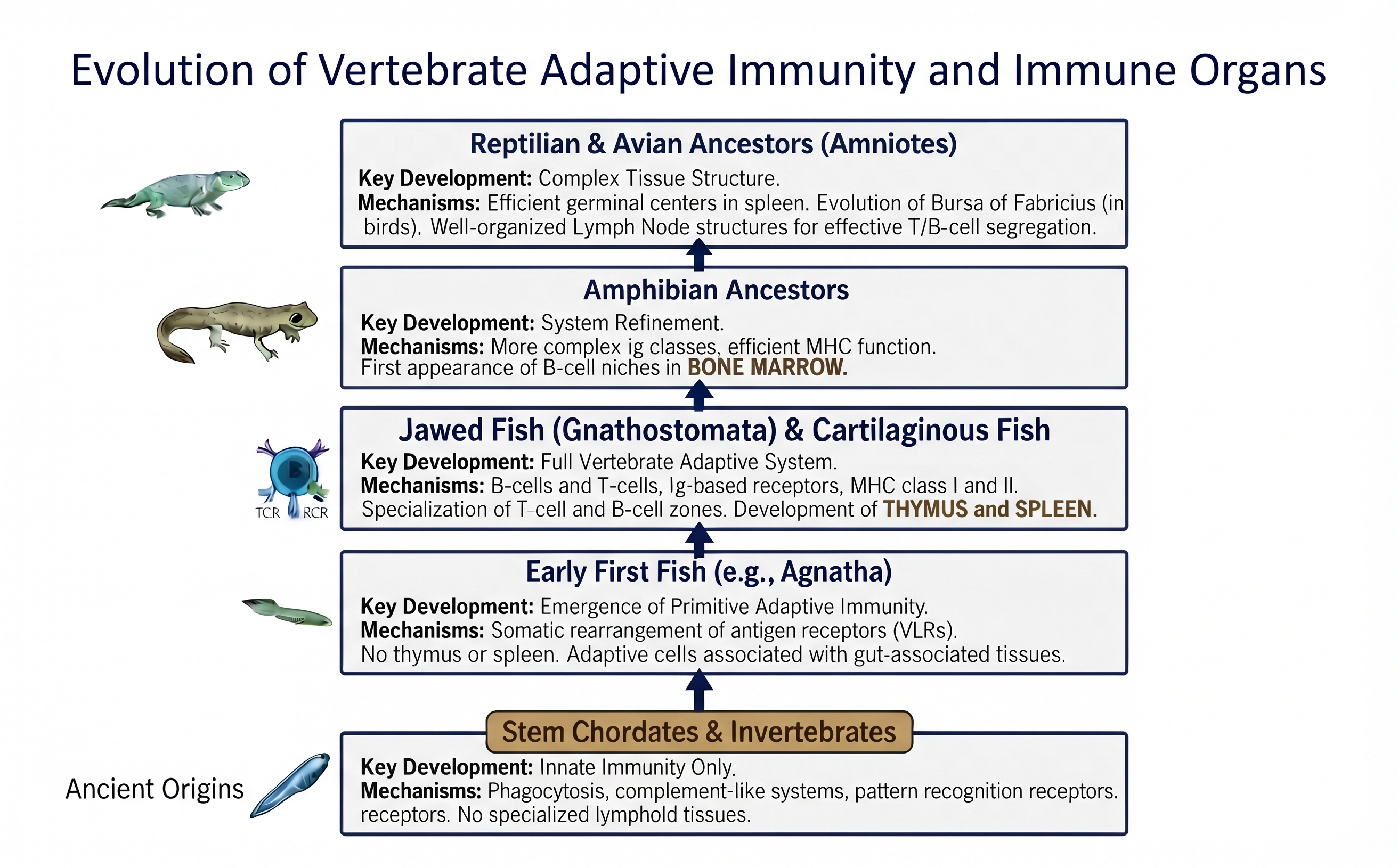
Adaptive immunity is exclusive to vertebrates and does not exist in pre-fish chordates. Cephalochordates and tunicates rely entirely on innate immune mechanisms, including pattern-recognition receptors, phagocytic cells, and antimicrobial peptides. These systems provide broad, non-specific protection but lack the receptor diversity and immunological memory characteristic of vertebrate adaptive immunity.
The adaptive immune system originated within early vertebrates after the divergence from cephalochordates and urochordates. This innovation was driven by the appearance of recombination-activating genes (RAG1 and RAG2), which enabled somatic recombination of antigen receptor genes. Early vertebrates developed lymphocyte-like cells capable of generating diverse antigen receptors, marking the beginning of immunoglobulin-based recognition and long-term immune memory.
Jawed vertebrates later expanded this system into the full complement of immunoglobulins, T‑cell receptors, and major histocompatibility complex molecules. This expansion also introduced activation‑induced cytidine deaminase (AID) and class switch recombination, through which B‑cells can shift from one immunoglobulin isotype to another (e.g., IgM to IgG or IgA) without altering antigen specificity. Class switching is a vertebrate innovation that increases the functional diversity of immune responses and is absent in pre‑fish chordates. Jawless vertebrates evolved a separate adaptive system based on variable lymphocyte receptors. Both systems demonstrate that adaptive immunity arose only after the vertebrate lineage emerged and was not present in pre‑fish chordates.
Evolutionary Significance
Pre-fish chordates provide essential insight into the origins of vertebrate anatomy and development. Their simple body plans reveal the foundational structures that later diversified into the complex systems seen in fish and other vertebrates. By examining cephalochordates, urochordates, and early vertebrates, it is possible to trace the emergence of key innovations such as vertebrae, crania, advanced sensory organs, and the adaptive immune system. These groups form the evolutionary bridge between primitive chordates and the vast diversity of vertebrate species that followed.